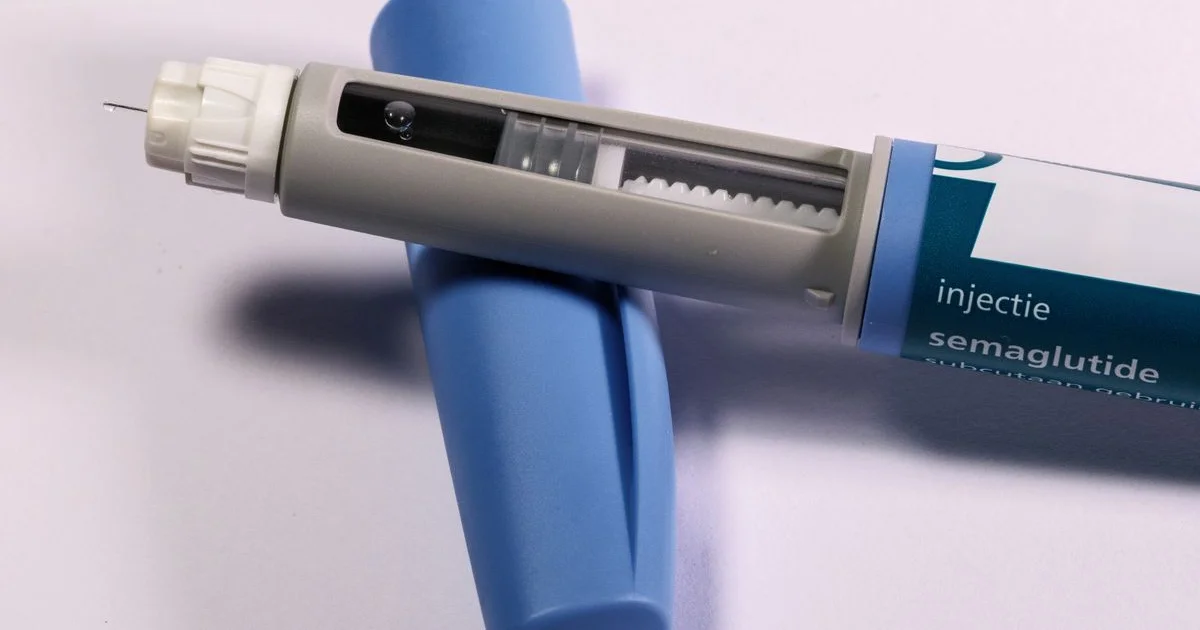
Everyone’s talking about Ozempic.
Your coworker lost 30 pounds. Your neighbor swears by Wegovy. The internet is flooded with before-and-after photos. Your doctor might have even mentioned it at your last checkup.
And part of you is curious. Maybe even tempted.
But another part of you is wondering: Is there something I’m missing?
There is.
The GLP-1 Revolution — What Nobody Tells You
GLP-1 receptor agonists — the class of drugs behind Ozempic, Wegovy, Mounjaro, and Zepbound — are genuinely remarkable. They mimic a hormone that tells your brain you’re full, slow down your stomach, and reduce food cravings.
The results speak for themselves:
- Clinical trials show 15-20% body weight loss
- Over 400,000 Americans are currently on a GLP-1 medication
- The FDA just approved Wegovy in pill form — making it even more accessible
- Pharmaceutical companies are racing to develop the next generation
It’s not a fad. It’s real science.
But here’s what the headlines leave out:
The Hidden Cost
- Monthly price: $800-$1,400 without insurance. That’s $9,600-$16,800 per year.
- It’s a lifetime commitment: Studies show that most people regain the weight within a year of stopping. The drug only works while you’re on it.
- Side effects are real: Nausea, vomiting, diarrhea, constipation, pancreatitis risk, and potential thyroid concerns.
- Muscle loss: GLP-1 drugs don’t distinguish between fat and muscle. You’re losing both — and muscle loss slows your metabolism.
- The “Ozempic face”: Rapid weight loss can leave your skin sagging and your face looking gaunt — something no one warned you about.
And then there’s the question nobody wants to ask out loud:
What happens when the drug stops working — or you can’t afford it anymore?
The Missing Piece: Why You Gained Weight in the First Place
Here’s a truth that GLP-1 drugs don’t address:
Your weight isn’t just about hunger hormones. It’s about your relationship with food.
Think about it:
- Why do you eat when you’re not hungry?
- Why do you reach for sugar when you’re stressed?
- Why does a bad day at work end with a pint of ice cream?
- Why can you follow a diet perfectly for three weeks and then blow it up in one weekend?
These aren’t biology problems. They’re mindset problems.
GLP-1 drugs silence the hunger signal. But they don’t touch the emotional triggers, the stress responses, the deep-seated beliefs about food and self-worth that drive overeating in the first place.
That’s why people on Ozempic still struggle with:
- Emotional eating (the hunger is gone, but the urge to eat for comfort remains)
- Food noise (constant thoughts about food that persist even on medication)
- Body image issues (the weight is gone, but the self-doubt isn’t)
- Yo-yo patterns (the weight comes back the moment the drug is paused)
The drug changes your appetite. Hypnosis changes your mind.
How Hypnosis Rewires Your Relationship with Food
Hypnosis for weight loss isn’t about willpower. It’s not about “just eating less.” And it definitely isn’t about deprivation.
It’s about rewiring the subconscious patterns that have been running the show — often for decades.
Here’s what hypnosis targets that GLP-1 drugs can’t:
1. Emotional Eating Triggers
You already know the pattern: stressed → eat. Bored → eat. Sad → eat. Anxious → eat.
Hypnosis works directly with the subconscious mind to break the link between emotions and food. Instead of reaching for a snack when you’re upset, your brain learns healthier coping patterns — automatically.
2. Portion Awareness
GLP-1 drugs make you feel full faster. Hypnosis helps you recognize fullness naturally — so you eat what your body needs, not what your emotions demand.
3. Cravings at the Root
Cravings aren’t random. They’re rooted in beliefs, memories, and associations your subconscious has built over years. Hypnosis identifies and rewrites those associations — so the desire for late-night snacks or sugary treats genuinely fades.
4. Self-Image and Identity
This is the big one. Most people who struggle with weight don’t have a food problem — they have a self-image problem.
Deep down, there’s a part of them that doesn’t believe they can be thin, healthy, or disciplined. That belief becomes a self-fulfilling prophecy.
Hypnosis works directly with that inner identity — helping you see yourself as the healthy, confident person you’re becoming, not the person you’ve always been.
5. Long-Term Maintenance
This is where hypnosis truly outshines medication. GLP-1 drugs work while you’re on them. Hypnosis gives you permanent tools — mental patterns that stay with you long after sessions end.
You don’t need a prescription. You don’t need a refill. You need a different operating system.
Can Hypnosis and GLP-1 Drugs Work Together?
Absolutely — and this is where it gets powerful.
Some people use hypnosis alongside GLP-1 medication to:
- Address the emotional eating that persists even when appetite is suppressed
- Build sustainable habits so the weight stays off if and when the drug is paused
- Manage the anxiety and body image issues that come with rapid weight loss
- Create a sense of control and agency over their own body
Think of it this way:
- GLP-1 drugs handle the biological side — appetite, hunger hormones, stomach emptying
- Hypnosis handles the psychological side — triggers, beliefs, identity, habits
Together, they cover both sides of the equation. But if you can only choose one? Choose the one that lasts.
Real Talk: Who Is Hypnosis Best For?
Hypnosis for weight loss is especially powerful if:
- You’ve tried diets before and lost weight — only to gain it all back
- You eat emotionally, even when you’re not physically hungry
- You’re tired of the restrict-binge cycle
- You want a drug-free approach to weight management
- You’ve been on Ozempic or Wegovy and want to transition off safely
- You want to address the root cause, not just the symptoms
What a Session Looks Like
Forget what you’ve seen in movies. There’s no swinging pocket watch. No clucking like a chicken. No losing control.
A weight loss hypnosis session at Wisconsin Hypnosis Center looks like this:
- You sit comfortably in a chair. Eyes closed. Fully aware.
- You’re guided into a deep state of relaxation — deeper than meditation, but you’re always in control.
- Your subconscious mind becomes receptive to new patterns — around food, body image, stress, and self-worth.
- Over 3-5 sessions, your brain starts running on its new programming — automatically.
Most clients report:
- Cravings diminish after the first session
- Emotional eating patterns break within 2-3 sessions
- Sustainable weight loss of 1-2 pounds per week — without deprivation
- A completely different relationship with food within 30 days
The Bottom Line
GLP-1 drugs are tools. Powerful ones. But they’re temporary tools that require an ongoing prescription, ongoing cost, and ongoing dependency.
Hypnosis is a permanent upgrade. It changes how your mind works — not just how your body responds.
You don’t need another medication. You need to reprogram the brain that’s been sabotaging you all along.
Your Next Step
At Wisconsin Hypnosis Center and Apple Valley Hypnosis, we’ve helped hundreds of people break free from unhealthy eating patterns, emotional eating, and the yo-yo diet cycle — using professional guided hypnosis and NLP.
Whether you’re considering GLP-1 drugs, currently on them, or looking for a completely natural approach — we can help you find what works for your body and your mind.
Book your free consultation today.
Professional Guided Hypnosis and NLP helps your relationship with finances, people, physical health, emotional health, and professional skills.
Did you know we teach Hypnosis and NLP for those who want to learn these skills for your business, for your personal life — or if you’d even like to be certified and have this as your next career?
Wisconsin Hypnosis Center – Contact Us
Apple Valley Hypnosis – Contact Us